




























Sign Up for Our Monthly Newsletter
Stay up-to-date on the latest engineering insights, material data, and manufacturing trends from Cohesive Components.

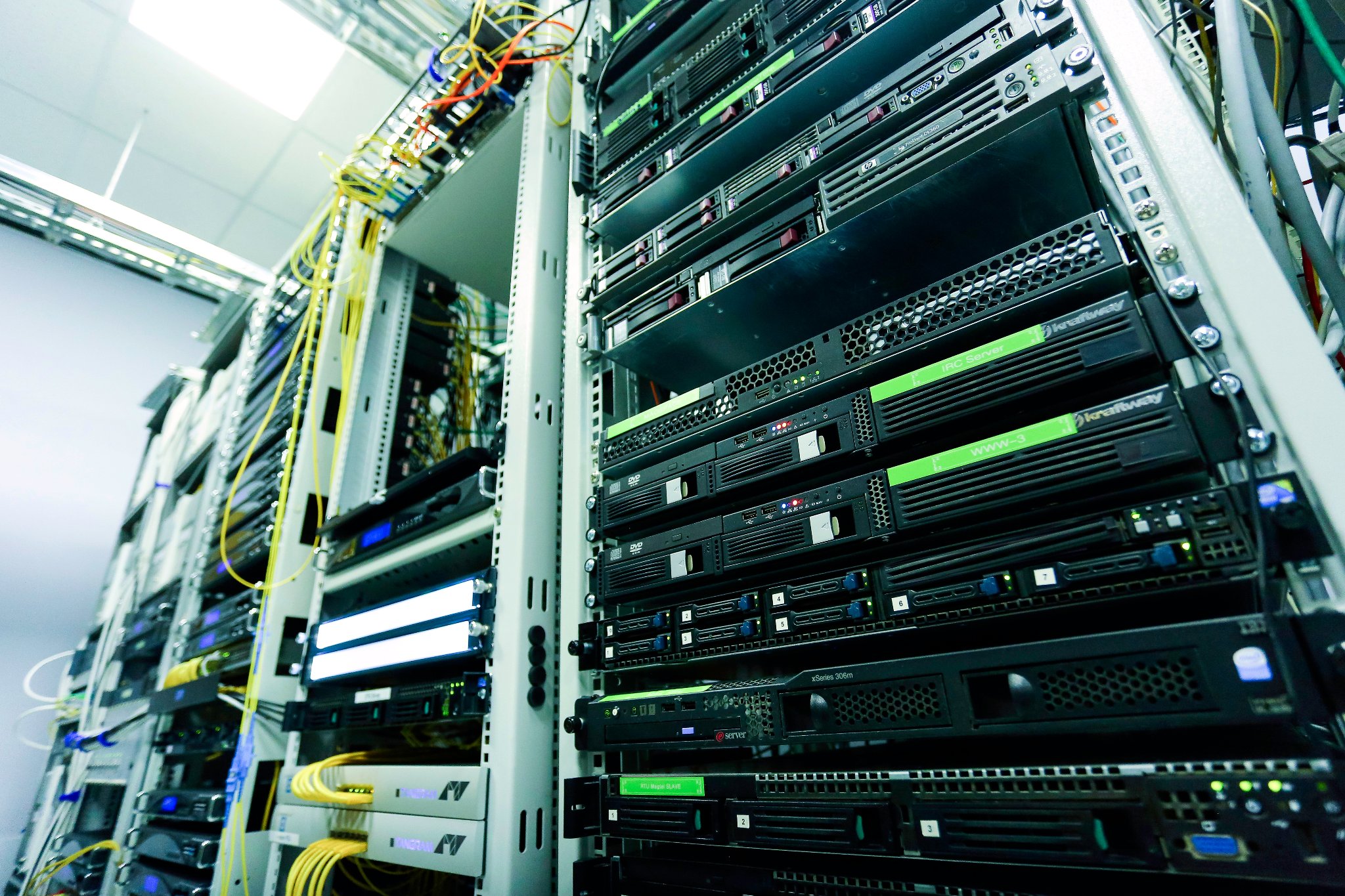
Modern servers are being asked to process more data within increasingly dense computing environments. As processors, memory and other components become more powerful, they also generate significant amounts of heat.
Removing that heat efficiently is essential. Excessive operating temperatures can reduce performance, shorten component life and increase the risk of equipment failure. Data center cooling systems play a major role in controlling the overall environment, but effective thermal management also happens at the component level.
Custom thermal interface materials can help transfer heat away from critical electronics and improve the efficiency of the systems designed to cool them.
Nearly all of the electrical energy consumed by computing components eventually becomes heat. Processors are an obvious source, but CPUs are only one part of the thermal equation. GPUs, memory modules, storage devices, power supplies and other electronic components can all contribute to the heat generated inside a server.
As computing density increases, more heat may need to be removed from a relatively small physical area. Without effective thermal management, temperatures can rise quickly. This can contribute to thermal throttling, reduced equipment efficiency and accelerated degradation of electronic components.
Facility-level cooling can control ambient conditions, but heat must first travel from the electronic component to a surface or cooling system capable of carrying it away. This is where thermal interface materials become important.
A thermal interface material, or TIM, is a thermally conductive material placed between two surfaces to improve heat transfer by filling microscopic gaps and reducing thermal resistance.
Even surfaces that appear flat contain microscopic imperfections. When two solid surfaces are placed together, these imperfections create tiny air gaps. Because air is a relatively poor conductor of heat, those gaps can interfere with thermal transfer between a heat-generating component and a heat sink, cold plate or other cooling surface.
Thermal interface materials conform to those irregularities, replacing much of the trapped air with a material designed to conduct heat more effectively. The result is a more efficient path for heat to move away from sensitive electronics.
Thermal interface materials can support heat management across multiple components inside servers and networking equipment.
Applications may include:
The appropriate material depends on the component, available space, operating temperature and cooling architecture. A thin interface may work well where two surfaces are closely matched, while larger gaps or irregular assemblies may require a compliant gap-filling material.
Thermal conductivity is an important consideration when selecting a TIM, but it is not the only factor.
Engineers may also need to evaluate:
Evaluating these characteristics together helps engineers select a material suited to the complete application rather than relying on thermal conductivity alone.
Working with a material converter allows server and data center equipment manufacturers to develop components around the requirements of the application.
Cohesive Components’ converting capabilities include die-cutting, CNC cutting, slitting, skiving and custom assembly. These processes can be used to transform thermal interface materials, foams, silicones, adhesives, shielding materials and other substrates into production-ready components.
Custom converting can also help manufacturers:
Engineering support can further help identify materials and manufacturing approaches that balance thermal performance, manufacturability and cost.
Material availability can be just as important as converting capability. As a 3M Preferred Converter, we provide access to a broad portfolio of 3M materials along with technical resources that can help support material selection and application development. This combination allows engineers to evaluate multiple material options rather than designing around a limited catalog of standard components.
As data centers support AI, cloud computing and other high-density workloads, thermal management will remain an important part of server design.
Facility cooling systems are essential, but effective cooling begins much closer to the source of the heat. Properly selected and precisely converted thermal interface materials help create an efficient thermal path between electronic components and cooling hardware. When combined with effective sealing, airflow management and environmental protection, these components can help servers operate reliably under demanding conditions.
Cohesive Components works with server and data center equipment manufacturers to develop custom thermal management, sealing and protective components for high-performance computing environments. From material selection and engineering support to precision converting, kitting and assembly, our team can help develop components designed around the specific thermal and mechanical requirements of your equipment.
Need a custom thermal management solution for your server or data center application? Contact Cohesive Components to discuss your application and find the right materials, geometry and converting process for your design.